

Mingling Art, Technology, and Culture over 2000 Years
Last year, a seed was planted in my mind by a podcast episode: what transformations might a creative piece take?
The Adagio for Strings has traveled many roads. The particular one I learned about fascinated me. Join me on a journey through creative time and space.
The Beginnings of Barber’s Adagio for Strings
In 29 BC, Virgil, writes his epic poem, Georgics, in ancient Rome. In the second section, he describes a wave swelling as it rolls to shore:
“. . . when a wave begins to whiten in mid-sea, from the farther deep it arches its curve, and, rolling shoreward, roars thundering along the reefs, and, huge as a very mountain, falls prone, while from below the water boils up in eddies, and tosses black sand aloft.”
Vault forward many centuries later to an Austrian cabin in 1935. American composer, Samuel Barber (1910 – 1981), was reading Georgics while working on compositions. Virgil’s poetry inspired Barber’s Adagio for Strings. (This was a slow second movement for a string quartet.)
In November 1937, the NBC network launched their new idea, a weekly radio orchestra. The NBC Symphony Orchestra lured Arturo Toscanini out of retirement in Italy to record with other prominent musicians in a New York City radio studio. Toscanini asked Barber for an orchestral version of the adagio which was aired on November 5, 1938. (The orchestral version is fuller than the original string quartet and has the sad quality we’re familiar with.)
Barber became a household name and his haunting piece began its journey as a part of American culture.
The Adagio and American Culture
Many feel the adagio evokes sadness. It’s likely most audiences aren’t imagining the ocean. The Adagio for Strings became our music for national mourning. The music does sound melancholy, but how did this piece become cemented in American culture?
National Mourning
- It became more familiar when played repeatedly on radio stations across the country upon the death of President Franklin Roosevelt (1945).
- On the Monday after JFK’s assassination (1963), Jackie Kennedy requested the National Symphony Orchestra to broadcast the piece over the radio.
- The adagio was featured in the Vietnam War movie, Platoon (1986) and other films.
Globally
- American Leonard Slatkin was in London for the Proms music festival when he heard the news of the attacks on America on September 11, 2001. He was not sure about how to conduct the final night of the Proms and chose the Adagio for Strings as part of the program. He asked for no applause after the piece and Britons all over joined in a minute of silence. (Watch the performance. I include the timestamp of 7:38.)
- BBC Radio played the adagio several times after the death of Princess Diana (1997).
- On the twentieth anniversary of 9-11, the Proms performed the Adagio for Strings again with a new choral adaptation (2021). The words of Agnus Dei were sung with the orchestra.
What Creativity Was Expressed
Publius Vergilius Maro composed his lengthy poem full of pagan and agricultural images. One line compared the movements of a bull to an ocean wave.
Samuel Barber latched on to that description for an adagio, the second of three movements in a string quartet.
Arturo Toscanini conducted an orchestrated version of just the adagio in a New York City studio for radio audiences.
This piece was aired repeatedly at times of national mourning.
Famously, after 9-11, American Leonard Slatkin conducted the Adagio for Strings on the last night of the BBC’s famous Proms music festival.
Twenty years later, the BBC Proms features the Adagio for Strings in a choral arrangement. We have gone full circle as the words are sung in Latin.
The journey of the poem and the music has come to the feet of Jesus. Watch a bit of the Proms 2021 performance with captions of the English translation of the Latin Agnus Dei (from the 600s or earlier): “Lamb of God, who takes away the sins of the world.” (Also see NOTES about Agnus Dei and for full lyrics).
How Does This History Impress You?
- Other works in any genre can inspire my creativity.
- Culture and events can transform a piece. How was it performed? When was it released?
- Would I be open to others using my creative work differently from my original intent?
I’d love to hear your thoughts.
Listen to a performance of the Adagio for Strings by the Saint Louis Symphony Orchestra, Leonard Slatkin conducting.
NOTES:
- Agnus Dei has its own branching flow of history and culture. Agnus Dei is familiar in Roman Catholic (and other) liturgy and comes from the words of John the Baptist (about 30 AD) in John 1. Agnus Dei was added to the mass by Pope Sergius (687-701). It predates him, however, coming from an older Syrian tradition. The words translate as: “Lamb of God, who takes away the sins of the world, have mercy upon us! Lamb of God, who takes away the sins of the world, have mercy upon us! Lamb of God, who takes away the sins of the world, grant us peace!”
- I learned about Adagio for Strings from a Sticky Notes: The Classical Music Podcast episode. Go to the episode, “Barber Adagio for Strings” and timestamp 14:03. Listen to conductor and podcaster, Joshua Weilerstein, as he reads Virgil’s Georgics poetry of the swelling ocean wave while the music of the Adagio for Strings flows in the background.
- You might want to listen to the entire episode. (I didn’t take Latin in high school. I didn’t take Music History or Music Appreciation in college (although I should have). I learned a bit of both from this episode, with a smattering of American culture and history.)
- The quote from Georgics, Book 2, is taken from the end of the paragraph numbered 209. See this online translation.
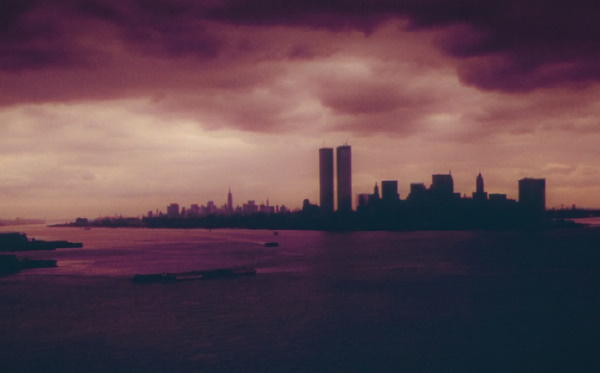
- The photo of the Twin Towers in New York City by History in HD on Unsplash.

 godfullyknown.blog
Sus, I love your premise! Once we release art into the world it touches and moves people in ways we didn’t anticipate. They add to it, interpret it and it motivates them to create more. It’s really the creative move of God in the world in and through us. It’s us reflecting the image of God in us.
I’m going to share this with my teammates!
LikeLike
Thanks so much, Julie, for your encouragement.
LikeLike
This is an interesting analysis and history of a creative endeavor! Would that all artists saw the value in sharing their work!
LikeLike
Thanks, Jerry. I have the Sticky Notes podcast to thank.
LikeLike